Sugar Loaf Helmet
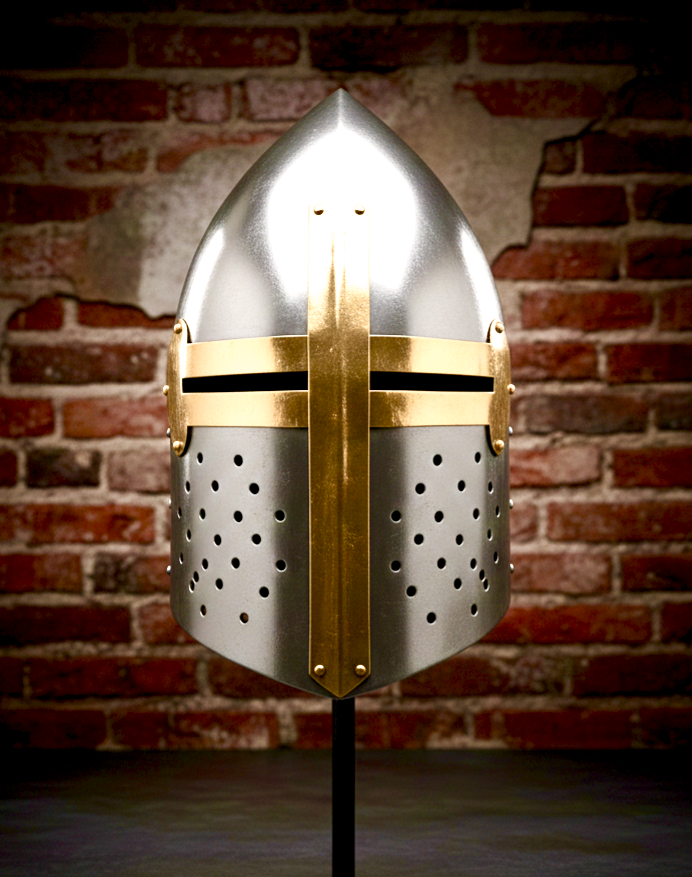
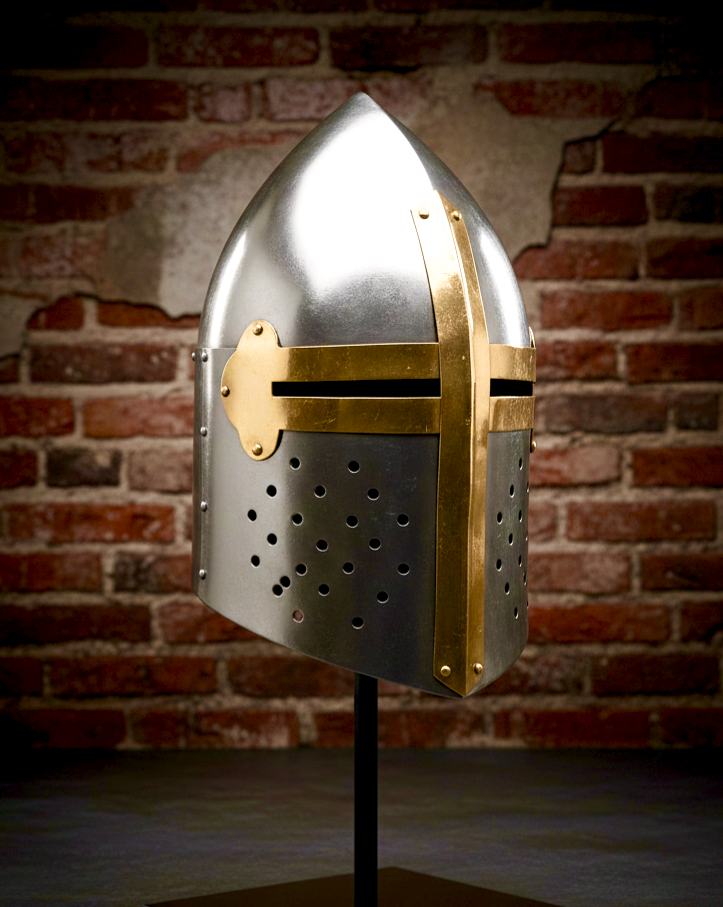
The sugarloaf helmet (c. 1275–1350) is a 13th-14th century, known for its conical, pointed top designed to deflect blows. Evolving from the flat-topped this helmet often featured a hinged visor and was worn by knights and Crusaders for superior protection and better visibility. Features a distinctive, tall conical dome that improves protection against downward strikes from axes, maces, and swords. Often includes a hinged visor that can be lifted for better ventilation or removed for cleaning.
Equipped with narrow, elongated eye slits for improved sight and breathing holes for ventilation.
Typically made of 14–18 gauge steel, often featuring a reinforced cross-shaped design on the front.
Popular during the 14th century. The term “sugarloaf” derives from the conical shape of sugar loaves sold during the medieval period, though the helmet was officially known as a variant of the Topfhelm or Great Helm. They offered better protection than earlier, simpler designs and were often decorated with brass or other materials.
Related products
-
Helmets
Templar Knight Helmet
-
Helmets
Norman Knight Helmet
-
Greek Helmets
Troy Helmet with Plume